Thursday, 26 April 2012

Village Green Preservation Society – The Kinks

This purports to be an analysis of concert footage from London in 1973, specifically of the song ‘Village Green Preservation Society’, but diverts from its purpose many a time.

This video is a virtual microcosm of the Kinks’ career and Dave’s trajectory within it. A foretaste of what was to come. It’s a falling line on a graph: from singing lead vocal on much of the Kinks early output, albeit B-sides or album tracks, some self-penned, some by Ray and many of the covers (‘I Wonder Where My Baby Is Tonight’, ‘Got My Feet on the Ground’, ‘I’m Not Like Everybody Else’) to joint lead on some songs (early, ‘Milk Cow Blues’, 'I Don't Need You Any More', slightly later, ‘Juke Box Music’, at least live), to backing singer (‘Life on the Road’, ‘Slum Kids’, ‘The Informer’). Later, and you imagine it’s in the manner of a papal dispensation, he’s granted a temporary recall from banishment and brought in from the cold to sing a song or two live (with some kind of entente cordiale in the early 80s when he gets to sing three: ‘Come On Now’, ‘Living on a Thin Line’ and ‘Bernadette’) unless a song proves very popular like ‘I’m Not Like Everybody Else’, in which case Ray resumes lead, even though he wrote this song for Dave’s voice, as he did ‘Sleepless Night’. (For more on this, please see 'bashfulbadgersblog'.) Sometimes he’s allowed to sing ‘Too Much on My Mind’ but they never seem to play ‘Strangers’, ‘Mindless Child of Motherhood’ or ‘This Man He Weeps Tonight’. At least, if they ever did, they’re not on YouTube, which is I’m afraid my only point of reference since I never saw them live. If only.

[In fact, ‘Milk Cow Blues’ proves an exception to the rule, with Dave originally singing a verse then passing the lead to Ray as in the 1965 version above - Dave’s like a wild animal, a tiger (in fact, in 'My Way', he sings 'I was born a tiger'), there’s often something uncontrolled about him, in his guitar playing and his singing – you’ll never hear him play/sing a song exactly the same way – it’s all fluid and flexible and when he gives, he gives it all, totally instinctual, the lyrics are mutable; at this stage, Ray’s more like a pussycat, riled enough to reveal his claws and rhythmically thump his tail but back to refuting my own point, in this 1966 performance, Dave starts the song, Ray takes over lead vocal then it reverts to Dave at the end and it’s as if they’re competing with each other as to who can hold the notes longer and deliver them with the most passion.]

While I’m on Dave’s backing vocals – well I was on them till I went off-track – I have to eulogise them a little. Their voices are so distinctive and they blend so well; Dave’s higher-pitched tone an emotional echo (it is an echo as it’s often just slightly behind Ray’s lead as people have commented on the Ray Davies Forum but it works like this and I’m sure is deliberate) and counterpoint to Ray’s voice of reason. Listen to ‘Scattered’, ‘Life on the Road’, ‘Slum Kids’, ‘Picture Book’, 'Jukebox Music', ‘Mr Pleasant’. I said in one of my first blogs, how live, Ray quite often acknowledges the advent of Dave’s distinctive backing vocal with a smile of recognition, sometimes combined with a sexy hairtoss, no doubt realising that this is a pretty irresistible combination, the incorrigible flirt. [It reminds me of a Bratpack movie, where a girl could flick her hair and smile and it was wryly considered a great accomplishment. Might have been About Last Night.

Googled it and it was (how’s that for my memory of total trivia?), found this:
Joan Her big move should be coming up any moment. The combination hair flip with a giggle.
Debbie There is a 3.2 level of difficulty here, Joan. Let's see if she can pull it off.
Joan This is it... this is it... Oh Yes!
Debbie Oh Yes! Yes! Oh Bravo! Bravo! 9.0!]

Don’t get me wrong. I love Ray’s voice and appreciate the way he can turn on a dime, from playful and affected to impassioned. To see him perform ‘Yo Yo’ (1982, Essen), with such total and more-than-adrenalin-fuelled commitment, is astonishing. He’s completely mesmerising. He gives everything. And so does Dave on guitar, so powerful; they match each other’s intensity. I love it when Ray reaches the top end of his range in ‘Million Pound Semi-Detached’ – it’s really touching. The choices he makes musically are always spot on. It’s not so much that he can do something as when he decides to do it, sometimes on the most unromantic word, like ‘semi’. ‘The Real World’ is a beautifully put-together song, in which Ray’s vocal wrenches your soul. Listen to the last verse/chorus ‘So head off in the car and follow the stars’ – it’s heart-breaking, the first half of the line plain-speaking, the second imbued with that wistfulness that only Ray can impart, in lyric, voice and melody (his signature move, level of difficulty: irrelevant to him because it comes so naturally). When he writes about Dave, and I don't think I’m reaching here (‘So you headed down south, left your old home town, … relocated so far away from the real world’ – it doesn’t take a detective to work this out although I admit that it could just as easily be about an ex-girlfriend), there’s always a special intimacy plus a real evocation of loss and regret. You can hear the love in his voice even if he’s unable to express it when they meet. I don’t think Dave needs to worry that Ray sometimes minimises his contribution (after all, what better way to wind him up?), because it’s obvious that he’s always in his thoughts. And I’d venture much more so than the other way around.

Anyway, I digress: Ray is sweaty and preternaturally pale and extraordinarily beautiful in this particular incarnation. Dave is slight (and perhaps used to being slighted), almost physically diminished somehow, insubstantial, an effect of his stance and position; as if he’s trying to disappear altogether. He looks like his body is there but his mind somewhere else. His eyes are glazed. They look without seeing, in complete contrast to this early ‘Waterloo Sunset’, in which he’s so alert to the camera’s every move, so intent on being noticed, forever making eye contact with the lens.

So, let’s (over-)analyse:
Ray is in shot as he shyly and somewhat disingenuously introduces the song. Camera zooms out from Mick to a wide shot of the band.
Both Ray and Dave are shown, in the forefront of a wide shot, side by side, almost equal partners.
Then a two-shot, both in view, with Ray in focus in the foreground, Dave out of focus behind him.
Throughout the performance, the cameraman pulls focus now and then, rendering one clear, the other blurry, neck and neck, as it were. There are glorious stereo hair tosses as they synchronously approach the mikes to sing. Usually Ray is in focus and pre-eminent, with Dave out of focus; he seems to be first a shadow, a smaller image of his brother (because of perspective), then in his brother’s shadow. This is the most recurrent shot (this technique is also evident in this live version of ‘Juke Box Music’ although the emphasis on Ray is less pronounced). And possibly the story of Dave’s life; also used in this video of ‘Days’, with Ray mostly clear and Dave mainly blurred although it switches occasionally.
Dave medium close-up right, remembering the words.
Ray extreme close-up right – don’t need to say whether he knows the words or not – if he didn’t, there would be no song; he can't rely on Dave.
Back to the usual two-shot, with Ray clear in the foreground, Dave less distinct behind him.
Then they are shown separately, from different sides, superimposed on the background of the whole band, face to face, as it were, with Dave visible in the background and foreground, forgetting the words (well, there are so many!) and, in the background shot, looking somewhat dazed, perhaps by the onslaught of lyrical verbiage.
A technique much beloved of the BBC at the time is common here, where a dissolve is unresolved so that you can see through the subject in the foreground to the shot behind. Very noticeable in much ‘TOTP’ footage of the Kinks. See the aforementioned ‘Waterloo Sunset’, for instance. A contrariness in me always wants to see the person in the background.
The camera pans down from the right to show most of the band one by one.
Ray alone in medium shot, from front. Can hear Dave in background – it’s not fair – he knows this bit!
Shot of horn section.
Two-shot again, Ray in front, with Dave and John Dalton part of the indistinct background.
Camera swerves to show Ray from right.
Camera ranges to show most of the band.
Back to the recurring shot. Both again, in a two-shot and both in focus.
Switch to the facing images again but this time they’re both Ray, one medium close-up left and an extreme close-up right and only part of Dave is accidentally visible; he’s lost in some dark, out-of-focus (as out of focus as his eyes) hinterland, an in-between world, another dimension, between the two in-focus shots of Ray before disappearing altogether. This scenario is the one that seems to have most often proliferated in live footage of the Kinks ever since, with sometimes almost whole concerts in which the only parts of Dave you’re likely to catch sight of are his hands on the guitar, during a guitar solo – that’s if they’re not showing Ray’s by mistake.
Dave alone right.
Camera pans to two-shot again, this time with Dave in focus, everything but his eyes at least (and that’s no fault of the cameraman). A final reprieve.
Back to the horns again, with the shot gradually widening to encompass Mick then the rest of band.

After
Dave smiles shyly, timidly, at Ray, with something of a beaten dog still anxious to please an unpredictable and volatile master.

Ray graciously and flamboyantly receives the audience applause with a grandiose flourish.

Dave isn’t zoned out for the whole concert. He invests all his energy and enthusiasm in ‘Good Golly Miss Molly’, very obviously enjoying himself (and when you see him like that, how could you deny him the opportunity, the unadulterated joy, also apparent in his failure to hide his smile of anticipation before he sings the beginning of ‘Juke Box Music’); in fact, the whole band looks more relaxed, apart from Ray, whose engagement seems jittery and nervous in comparison and whose backing vocals sound a little strained and frantic. During Dave’s guitar break, they show Ray on the mouth organ, which you can't hear in the mix.

Poor John Gosling is so far over to the left that the camera can hardly ever include him. He can occasionally be spotted in the background of other shots. But at least he isn’t made to appear in some costume or other, those wicked boys.

Obviously, it’s natural for the lead vocalist (especially when he’s also the songwriter) to take centre stage in performance so this analysis is in a sense, a little facetious. But I had fun.

Intended to do a blog on the recent Satsang event at Dave’s house but I know someone else who’s writing one so don’t want to duplicate that. More later but suffice to say 'Milk Cow Blues' is still a showstopper.

First, I'll report on a weekend in the perfect village, according to William Cobbett, where the Church of Leven gathered for Easter.

Tuesday, 3 April 2012

Who Should Play Ray and Dave Davies in the Kinks Movie?

Beautiful, beautiful, beautiful, beautiful boys
20 March 2014 Update
In view of the latest developments on the Kinks film, i.e. none, I've revised this blog to make a few more suggestions. Feel free to comment.

Being driven to distraction by the people put forward on the Ray Davies Forum as possible candidates. I want to stick my oar in but have no idea how to upload pictures to a message so I have to do it via a quick blog.

No no no! Not Matt Smith. Have you all lost your minds? He can't be Ray. He’s not nearly attractive enough. Nor is Ben Whishaw. It’s not enough to bear a slight resemblance from a certain angle if you crop half his face off. He has to be beautiful.

It’s immediately apparent that we all see Ray and Dave differently. We can only be subjective. With that in mind, here I go.

Ben Barnes
Ben Barnes is a possibility and he looks great with long hair. He's played Prince Caspian and Dorian Gray. Swashbuckling or effete, he can do it.
Or how about Hans Matheson? Great actor, plays guitar and has already accomplished the pseudo-Cockney thing Ray has going many a time. His performance in Dr Zhivago should have propelled him to stardom instead of the wooden Keira Knightley. And he has Ray's generous mouth.


Cillian Murphy


Cillian Murphy has already sung ‘You Really Got Me’ in Disco Pigs. Also a musician and an actor. Perhaps he’s too extraordinary looking though, with those cheekbones and eyes. For Dave maybe? We’d have to tone him down and rough him up a bit (Cillian not Dave). But I think he could do that insouciant innocence Dave somehow retained while he was a rampant teenage sex god. And he could definitely achieve the femininity of the ‘Sitting in the Midday Sun’ Dave. See Breakfast in Pluto for proof.


Ray and Dave
Of course it’s going to be an impossible task to find anyone who could express their myriad qualities and different looks in a movie. You can't go with someone who, from a specific angle, bears a slight resemblance because they have to be as physically captivating as the brothers were. There has to be androgyny, ripeness (but not over-ripeness which would be the problem with Michael Pitt), a certain delicacy and amazing smiles, not forgetting the very uneven British teeth. The actors would need to have something comparable (rather than having any particular feature in common) that allowed the overall impression to be strikingly appealing in order to convey the indefinable, irresistibly attractive nature of Ray and Dave.


Sweet Ray
Perhaps the 70s hair can be achieved by a certain (un)styling – though I’ve never been able to get anywhere near it myself.

Not to mention that it might be useful if they could sing and play instruments …

But have any of you seen the aforementioned ‘Sitting in the Midday Sun’ video? Perhaps looking at actors is the wrong way to go. How about some girls?

Mind you, I’m a little worried that this creative team will produce something dated and irrelevant: unimpressed by the ancient sitcom writers, none of whose work has really entertained or amused me, and Julien Temple, who seems rather a one-trick pony (just my opinion) although I don’t mind the ‘Come Dancing’ video. I know the Davies have a track history with him and it might be ‘better the devil you know’ although I’m loath to quote Kylie at this point. Perhaps they’ll prove me wrong. I hope so. But I really don’t want the Kinks story to be reduced to a comedy of hackneyed one liners. It has to be so much more than that because it was.

Gratuitous pic of Dave and Ray, looking pretty
I’m not sure whether Ray’s judgement can be trusted on these matters, given the almost uniformly abysmal videos the Kinks turned out in the latter part of their career. You know the ones I mean, with the repetition of clichéd tropes (images within images, the person stepping into the movie frame, the photo coming to life, the band on the TV in the living room, the camera passing through the window of a house into another time, and so on) and the obligatory unattainable (or now lost) wispy, ethereal girl wafting in and out of time and shot, for example, 'Lost and Found', 'Down All the Days' and 'To the Bone'. The sweet 60s promos were far preferable, charming and straightforward – ‘I know! We’ll show them sitting on a bench. In the park!’ ('Starstruck', now no longer available on YouTube, such a shame) or ‘I know! We’ll show them walking. In the park! But it’s called ‘Apeman’ so one can be costumed as a gorilla!’ or ‘I know! We’ll have them playing their instruments. In the park!’ ('Sunny Afternoon') Brilliant.

Vincent Kartheiser
Some extra ideas. Let's not reject Vincent Kartheiser, here looking suitably androgynous (and rather elfin so maybe Dave?) as Connor in Angel and he can effortessly achieve sulky (surely much called for in the endless battle between the brothers?) or Jared Leto (always loved him in My So-called Life as the unattainable, cool-without-trying Jordan Catalano but should have got him before the Oscar but hey, it's a wishlist) who also sings/plays in a band (30 Seconds to Mars). Here's a link to their song, Hurricane.

Jared Leto as Jordan Catalano


And a couple of suggestions from leftfield or from out of the ballpark and down the street a way (I may be mixing American game metaphors here). How about Christian Kane? He sings, plays guitar, acts, has long hair and is cute. Here’s a clip of Sever from the Jazz Café last year. Of course he’s Texan and sings country but Muswell Hillbillies, anyone? The accent might be a problem. He loves to fight so could suit either of the Davies boys. Ok I admit it's just an excuse for me to put this picture of him in my blog.


Christian Kane - positively beatific
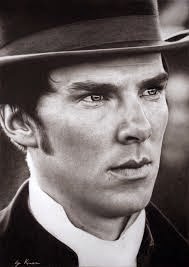
And, one from outer space (he does look a bit like an alien): Benedict Cumberbatch. Ok, he doesn’t bear any resemblance to the Davies brothers being pretty striking rather than strikingly pretty and he looks better if part of his face is covered up for some reason – it doesn’t matter which part. Check out Google Images and you’ll see I’m right. But if we knocked the hat about a bit, he could fit into the promo for Dead End Street.

Of the cast, Julien Temple says: ‘I think you would want to have the music played by the actors ... that is believable and real while miming is problematic’ so that leads us back to Hans, Cillian, maybe Jared or Christian.


Benedict Cumberbatch - Dead End Street?


Anyway I’ve stuck my oar in and now I’m going to paddle my boat hastily away before someone scuppers me.


Tuesday, 20 March 2012

Jackie Leven – Exit Wound

(This is a follow-up to my first piece on Jackie: The King of Love Has Died.)
‘i will be there beside you with my undiplomatic pain’
Watching ‘Single Father’, I feel tears in the back of my throat. Any song at any time, cheerful or mournful, can suddenly bring home to me that he’s gone; like learning it anew each time. ‘Another Man’s Rain’ has me sobbing for a minute before I pull myself together. I can forget for days at a time, especially if I don’t listen to any Jackie (but what kind of life is that?). When I do, sorrow resurfaces, like touching a bruise that just won't heal, like the scar in ‘Universal Blue’. My heart goes out to those who knew him well and must miss him exponentially more. But what I feel is also untainted by any personal experience of his flaws or failings – I only have the music and the memories of the gigs, always so amazing.

Yesterday, it was ‘God’s Children’ by the Kinks. Today, for some reason, it’s ‘Father and Son’ by Cat Stevens. And so what do I do? Play it again of course.

bittersweet – better late than never?
Somehow the belated recognition of Jackie’s genius seems to make his loss harder to bear, not easier. They didn’t want him when he was alive; he was ours then (I mean, ‘of us’); what do they want with him now? Our Jackie, who could find the romance in ‘burned-out cars’ and make a line like this sound hauntingly beautiful, through the grace of the melody and the tenderness of his vocal. Who could recognise that in the midst of death, we are in life: ‘A flower struggles through the steel’.

Part of me feels he’s merely a bandwagon for these Guardian or BBC dilettantes, hostages to the Zeitgeist, I call them, to jump on until the next thing comes along. You know the type, the people who, two records down the line, ‘discover’ the Fleet Foxes after the publicist has got to them and cut their hair, trimmed their beards, made them more palatable to the masses. Oh and after they’ve won a clutch of awards. Or who adore ‘The Wire’ because it’s so true to life, so real, having never been to Baltimore or anywhere similar, but who nevertheless feel qualified to pass judgement from their town houses in Kensington and Chelsea. (But, even if they had been there, they would have been booked into a four-star hotel in an upmarket neighbourhood, by some flunky at the office, taken cabs everywhere – God forbid that they should be exposed to public transport or to a millimetre of the seedy underbelly of the city.) They need everything validated by a critic in a paper or some style guru before they can like it themselves. Never really sure of their own opinions, they cite other people’s to vindicate their tastes. To quote Ray Davies (well, you know me) singing about the same phenomenon at a different time: ‘Your style, your views/Straight from The London Illustrated News/You speak your mind/Once you have read it in The Times’ (‘Who Do You Think You Are?’). My sister would cite (and has cited) those who suddenly thought Pulp were cool once ‘Common People’ became a hit, at the time when the rest of us believed they had become a parody of themselves, revisiting and rehashing something they’d done much better before. Perhaps they’re the sort who talk about iconic images. An icon is an image, you idiots. Who are always up to date with the latest fashions (what is current in nail design) and can spout designers at your blank face. To them, being hip is the ultimate goal. Yes, I’m selfish. I don’t want them to have him. They’re immune to the realness of Jackie because their lives are so effortfully ersatz. Their albeit fleeting interest devalues him somehow. But I suppose that appreciation is appreciation regardless of how someone got there and I know that there are genuine admirers among the journalists out there who’ve liked him for years and haven’t simply dropped in for one album or one gig, then hitched their horses to the next wagon.

I’m not saying it’s a crime to start liking something late in the day – I’ve just got into the Kinks so I’m pretty far behind the times. But at least I recognise I’m late. Oh, I think you know what I’m saying.

And I don’t really want Jackie to be considered alongside the ranks of those who become posthumously famous because this would put him in the same company as Eva Cassidy, whose anodyne, passionless versions of beautiful songs leave me cold, and Jeff Buckley, talented I’m sure but rather a one-trick pony. Jackie deserves a more discerning audience.

two tiny selves sleep (doll by doll)
Having been introduced to them early, I realise it is possible that I viewed (and heard) all music through the prism of Doll by Doll: ‘Eternal’, depthless ‘Grand Passion’, absolute extremes, that elemental quality that reaches into my very marrow: ‘That’s something my soul understands’ (‘Hey Sweetheart’). And maybe it ruined life for me by raising my expectations. But musically, how was I to fall prey to the retrogressive, rock-by-numbers of the Fearne Cotton age where everything is ‘amazing’ no matter how dated or derivative – from the Stone Roses and the Happy Mondays via Oasis to the Arctic Monkeys, Kasabian, the Kaiser Chiefs and the pomp and circumstance of Coldplay? How could I marvel at Ellie Goulding’s ‘voice’ when I didn’t hear a voice but an affected, watered-down whine, transforming a perfect pop song into a dreary dirge? But true talent transcends time, place, race, all those demographics. In ten years’ time, we’ll still be listening to Jackie but, hopefully, no one will remember Ellie Goulding. I say Ellie Goulding but it could just as easily be Lily Allen, Kate Nash, James Morrison, James Blunt and so forth. I’m not saying that collectively they have no talent, only that collectively they couldn’t hold a candle to Jackie.

‘marble city bar’
Listen to the extraordinarily powerful live version with the long introduction in which Jackie builds our anticipation by punctuating the story in which he recognises his own arrogance with the beautiful thrashing of his guitar and singing ‘Kilkenny, Kilkenny, Kilkenny’ each time he mentions the place as if it were an instruction to the audience: ‘Kill Kenny!’ Sublime crescendo. Such vehemence. Unforgettable. He could make believers of us all.

'midwinter in a minor key’
Listening to One Long Cold Morning, I can't help but feel that these songs were written, if not post-diagnosis, at least with the presentiment that all was not well. There’s a sense of assessment, acceptance, an ineffable sadness and an air of inevitable adieu, although this is all leavened with humour as ever.

music in ‘the word’
Pleased with the free CD. Although I would have chosen completely different songs to represent Jackie, the Twitter response shows that these will work just as well. It’s simply a testament to the breadth and quality of his output. Previously, I only had ‘Poortoun’ and ‘Another Man’s Rain’ live and, while I’ve been the first to champion Jackie’s peerless live performances, the studio versions, particularly of the former, do allow for nuances and delicacy that don’t always fully translate live. ‘Universal Blue’, on the other hand, sounds almost cheerful as if Jackie’s reached a point of philosophical resignation, a world away from the particularly trenchant rendition I’m used to on Deep in the Heart of Nowhere, in which each word is bitten off with venom: bleak, raw and uncompromising and as a result, heart-rending (or heart-rendering as a friend puts it – perhaps we should all have our hearts rendered in the first instance as it means ‘to apply a coat of plaster or cement directly to’; it would make these exit wounds easier to bear). Some songs, which are essentially the same as on a previous release, like ‘Men in Prison’, have a different (and in this instance, more poignant) resonance in this new context (of the CD and of its occasion). The sauntering swing of ‘Night Lilies’ matches the bad boy Jackie of old – ‘I live among lost men with winding down lives/I sleep on their sofas and feel up their wives’. Typically, Jackie manages to be clever, irreverent, honest, funny and profound.

I would have definitely included one of the following three tracks though: ‘Shadow in My Eye’, for its stripped-back simplicity and drama or the epic saga of ‘Call Mother a Lonely Field’, with Jackie’s voice omnipotent, the guitar answering the fourth line of the verse, like sunlight glittering on water. Jackie was an alchemist with the guitar. He could turn all to gold. [In a previous blog, I said he was a one-man choir but, with a guitar, he was a one-man orchestra. On these tracks, there are other instruments and backing vocals – the sound is full but, solo live, it would seem as if there were phantom musicians on the stage, playing alongside him; difficult to believe that he alone could create such a variety of sound.] Or ‘The Garden’, the reward of the sweeping chorus held off till the end, keeps a promise made by the verse; like wrestling through a dark tangle of briars to discover the perfect rose, or driving through the night and hearing Grieg’s ‘Morning’ from Peer Gynt at a resplendent dawn, the sad resignation of the words mitigated by the stirring melody, the message a reminder to us all.

We only ever get one rose in our overgrown garden and this is it.

words in ‘the word’
Informative and sensitive, Paul Du Noyer is obviously a longterm Jackie aficionado. I never knew Jackie’s real name was Alan Moffatt. Doesn’t have quite the same ring.

I was initially surprised by what Deborah had to say about fans (as if we were an amorphous mass proliferating discontent): ‘There was this view from fans that they almost wanted to see him suffering. They wanted to see him get wildly drunk … because that was their image of who they wanted’ but through later experience, I came to understand her completely although I don't think any fan of Jackie’s would want him to suffer in any way, for any reason. Jackie didn’t seem the sort to believe all that ‘I must suffer for my art’ baloney. I don't think he had to go in search of trouble, conflict or drama to write about. As Deborah says herself, he could probably create something magical and insightful on his failure to mend a fence. Anything could be grist for the mill of his imagination. It’s possible I suppose that people who knew him well might have encouraged or colluded in over-indulgence but with no intent to harm I’m sure.

‘fairytales for hardmen’
If you hadn’t heard any Jackie and simply read all the tributes, you might be left with the impression that he was a dour character, hard-living, hard-drinking (well that part may be true) with a troubled past, whose focus was on loss, pain and loneliness, that all this doom-laden introspection would lead you to depression and despair when exactly the opposite is the case. Jackie’s music isn’t like a Ken Loach movie, all gritty realism and futility (although these aren’t absent); it’s incredibly uplifting and joyful. Jackie has faced his demons, recognised and/or conquered them, with humour and grace. There’s wisdom, understanding, acceptance, even triumph. The music leads us into the light. I have to be grateful that we got as much of Jackie as we did, that he was so creative, so prolific, that he shared his heart and soul through his music and so allowed us all a glimpse of glory.

easter
Planning on joining the Botley motley crew for the get-together in Easter to celebrate and remember Jackie with like minds. This’ll be my first time. I’m sure there are people who can't conceive of going when they’re used to Jackie being there with them but I’m hoping it will help to share experiences, memories and emotions, walk, talk and explore.

some solace from Swinburne
From too much love of living,
From hope and fear set free,
We thank with brief thanksgiving
Whatever gods may be
That no man lives forever,
That dead men rise up never;
That even the weariest river
Winds somewhere safe to sea.


Other Leven blogs can be found at The King of Love Has Died, I Never Saw the Movie,  Jackie Leven and Adventures in Levenland.

Thursday, 15 March 2012

Kast-off Kinks Live February 2012

Went to see the Kast-off Kinks last week, with some reservations. I’d tried to watch a few YouTube clips but most of them sounded like a giant singalong, with the audience attempting to drown out the band. As a very recent Kinks fan, I had never been to see them live and didn’t know whether I could bear to hear someone else sing in place of Ray or Dave, who have such unique voices. I was ready to be disappointed but I had to go because they were playing a little club just a couple of miles down the road. (Thanks to Pete Feenstra for booking them and the magnificent Colin Blunstone at the Beaverwood, our great local venue.)

As we waited for one of our party to arrive, my sister spotted Mick Avory standing by the T-shirt stand and was brave enough to ask for a photo and engage him in conversation. What a nice guy and he really doesn’t look that much different to when he was in the band. Great to hear that infamous, deadpan South London voice. So down to earth. Saw Jim Rodford in the interval. I did what I normally do when I encounter anyone semi-famous, acted like I hadn’t seen either of them. Unfortunately, in ordering my drinks, I was blocking Jim from his, so sister chatted to him meanwhile. Friendly guy.


I expected them to play all the obvious 60s and 70s hits (and they did) and a few of the more popular songs from the Kinks live repertoire. I was resigned to not hearing ‘Village Green Preservation Society’, for instance. I was wrong and very pleasantly surprised that they played this, ‘Muswell Hillbillies’ and ‘Better Things’. It was great to hear a live band play those songs and brilliant that someone who will probably never get to see the Kinks live, will still get to see a band play the songs, complete with amusing stories from their various experiences of playing with the Kinks, combined with their obvious appreciation and respect for the material. And yes, Dave Clark doesn’t play the guitar like Dave or sound like Ray but he has his own take on things and it’s pretty good. Plus they vary it by sharing out the lead vocals between Dave, Jim and Ian Gibbons – even Mick comes to the front to sing ‘Dedicated Follower of Fashion’ – he can carry a tune and performs it well and with humour.

Of course, we did see Dave play with a band last year, which was incredibly special, incomparable, but at that time, we’d been Kinks fans for less than two months so, although devoted, we still had 30+ years of material to catch up with; now we’re much more familiar with all the songs. And the songs are something else.

Of course there were die-hard Kinks fans there and then the people we were with who couldn’t name a single Kinks song when pushed, who’d never been to see live music before, one of whom informed me that the singer had played with the Beach Brothers. Yes. That’d be after he left the Isley Boys then. Bless. They loved it too.

Stole the setlist after (as I did for Colin Blunstone the previous week) – they'd planned to play ‘Death of a Clown’ but didn’t. Would have liked to have heard some Dave songs – ‘Strangers’ or ‘Love Me Till the Sun Shines’. Or some of the 80s numbers: ‘Yo Yo’ or ‘Art Lover’. And why no ‘I’m Not Like Everybody Else’? Nevertheless, the whole thing was tremendous fun. The singalong bits were nicely managed by Jim and not overwhelming. And did we dance! I'd still give anything to see Ray and Dave play together but really refreshing to see a few ex-Kinks get on with it, without punch-ups or egos to distract them. Highly recommended.

For more info on the Kast-offs, where to catch them live, etc., see http://kastoffkinks.co.uk/.

Wednesday, 22 February 2012

X-Raying ‘X-Ray’: Part 3: ‘Lost between tomorrow and yesterday/Between now and then’


I’ve written I don't know how many words and still barely scratched the surface, let alone exposed the exoskeleton of the story. But, if I go on much longer, my appraisal will be longer than the book itself so this is it.

I’ll summarise the points I’ve made already and add a few more that pique my interest.

First, the subterfuge
Ray toys with his readers. Crafty and a natural wordsmith – he is able to seem to be saying something and its complete opposite at the same time. In a sense, with the characters and personas he’s created, either in his songs, this book, on stage, he’s always hiding in plain sight. He’s a chameleon, changing with the times but sometimes deliberately against the spirit of the times so that, instead of blending into the background, he’s thrown into relief (for instance, with the Meisterwerk, ‘Village Green Preservation Society’). But, although not entirely candid, he does acknowledge his own errors or faults, is not uncritical of himself.

He loves to dramatise (or melodramatise, if I can invent such a word) hence all the devices – the possessions, the dreams, the fantasies, the dark clouds, the strange context he creates in which to set his tale, of the mysterious Corporation – which form a series of veils between the reader, the reality and himself, a smokescreen. It’s a little frustrating, like those TV docudramas that are neither one thing nor the other where dramatic licence is used to spice things up. But, although it might seem like an essay in distraction, we’re always being told something. On to …

‘The people in grey …’
The faceless Corporation a symbol of the establishment he fears and society’s power to eradicate individuality (the ubiquitous us and them), the theme of ‘I’m Not Like Everybody Else’ and ‘Here Come the People in Grey’. There’s the fear that Ray will be the butterfly broken upon the wheel, the beautiful, fragile wings of his idiosyncratic talent and his delicate mental state torn to shreds in the blind, relentless cogs of the machine.

Of course, even at the time that Ray wrote X-Ray (1995), the notion of ‘Big Brother’ retained all the negative connotations it had in Orwell’s Nineteen Eighty-Four, of a society constrained and restricted by the attentions of a totalitarian state, a nightmare world where your every move was under surveillance. Since the advent of reality TV and Big Brother, in particular, in which members of the public gleefully and voluntarily subject their most private moments to the scrutiny of millions of viewers 24/7, it has become something that certain individuals actually aspire to as a quick route to fame, a privilege rather than an ordeal – hard to warrant I know. These days, celebrity is an end in itself, and it doesn’t seem to matter how you get there, for instance, by being clueless, shallow and loud (The Only Way Is Essex – apologies if I’m wrong about this because I’ve never watched the show). But, although RD’s paranoia about the tyrannical Corporation seems outdated now, the advent of the nanny state in the UK means that the notion of state-administered medication is actually quite plausible although any free medication’s ok by me.


Sex, love and so on
While Dave is happy to acknowledge a bisexual past (although often termed ‘bisexual’, this only means that he experimented with sex with men in the 60s not that he actually has any sexual contact with men now that he’s in his 60s), Ray is much more cagey and generally more of a private person so we have to make do with hints and suggestions. He might be leading us up the garden path but the flora and fauna we encounter en route are never less than fascinating, although they may very well be figments of his imagination. Was the mysterious man in Marianne Faithfull’s room really Ray? He’s a provocative little minx, forever leading us astray.


In the My Generation documentary, Ray admits that Kinks songs aren’t used to chat up girls because the ‘sexual overtones are not wholly masculine’. I’ll say. There aren’t many ‘Let’s Spend the Night Together’-type exhortations in Ray’s lyrics.

An aside: Ever audacious, Ray is not afraid of tackling the taboo of paedophilia in the strangely touching ‘Art Lover’, with his usual humour and understanding, typically destabilising the preconceptions he set up with the title, the ‘Come to Daddy’ refrain and ‘Jogging in the park is my excuse/To look at all the little girls’ with ‘She's just a substitute/For what's been taken from me’, leading to YouTube comments that this is the point of view of a father who’s lost custody of his own little girl(s), etc. rather than a pervert in the park. So Ray takes us from perversion to subversion in two lines, which could also refer to his own loss of innocence. So clever. But what about the rather arch introduction and the shades and flat cap he dons to role-play the live version? Not to mention the saucy tongue action (2:28, after the shades line) that my sister pointed out to me – too lascivious for a father/daughter relationship. But his delivery is so tender. How does he make that 'creepy uncle'-look sexy?

Power and control
RD probably rails against the intrusion and the hegemony of the Corporation because he is something of a control freak himself. From early athletic meets to relationships (familial and otherwise) and band politics, he needs to prevail. This is evident in his reaction to school.

‘I was not particularly bright in the sense that I could only absorb information that interested me.’
Most of us are like this. Of course it’s easier to retain knowledge on a subject that appeals to you (for me at the moment that would be the Kinks). It doesn’t make Ray special, it makes him normal, the very thing he claims he is not. But we are all judged by the standards of the time. These don’t fit everyone as we all have different abilities and skills. He’s not the only child to have felt like a misfit. If children were allowed to do only the things that interested them, we’d have an education system where kids learn animation before they learn to read and write because kids like cartoons. Oh hang on, that's what we do have since the new powers that be have deemed that school must be enjoyable at all times. No one would study Shakespeare or Dickens because the language is too difficult or the texts too long. And they’d all end up with qualifications in nail technology or something equally fatuous.
He also makes a comment about his eccentric spelling (and later pronunciation – ‘Acute Schizophrenia Paranoia Blues’, in which Ray sings ‘schizophrena’ each time). Hmm. I’m an editor by trade – there are two ways to spell words – the wrong way and the right way. There has to be consistency in education. ‘Schooldays’ is slightly more even-handed.

‘I could read, but I wasn’t allowed to read what I wanted.’
There’s always the library, honey. I read library books all the time as a child, some wildly inappropriate. I left primary school, having read most of Alexandre Dumas and the James Bond novels, pretty racy stuff for an eleven-year-old.
‘I had to decide whether to play the game their way, and succeed or fail according to their rules, or go my own way. I decided to settle my own fate.’
Ray opts not to participate in the Eleven Plus exam that could determine the course of his life. A bold move of rebellion or the avoidance of failure? It allows him the illusion of power at least.


Attention-seeking missile
‘This was my first victory over my newly arrived adversary sleeping in the cot by the kitchen table. All the pain I was suffering was inconsequential. I was once again the centre of attention.’
Three-year-old Ray throws himself out the door in order to wrest the family’s focus away from his baby brother.

‘I tried to toughen up my resistance to any further injuries by tapping away at my legs with a hammer. … it was … a horrible attempt to manipulate my parents’ emotions.’

Ray admits that this was really a cry for attention. We’re lucky that he found other, less painful ways to grab the limelight from the interloper as he’s evidently prepared to suffer to gain a little leverage. I don’t even want to think about the suicide attempts. Just grateful that Ray was as inept as the man he writes about in ‘Life Goes On’.

Fatalism
There’s a sense of fatalism in the book, with Ray sometimes wanting things to end before they begin so that all he experiences is the anticipation of possible bliss before it has a chance to turn into betrayal or despair. Of course this is written in retrospect – and we all see so much more clearly then. He reacts like this to certain defining moments or points of perfect happiness in his life, after which things usually alter for the worse. [I’m a great proponent of delayed gratification and I rather suspect that Ray is too. Dave would favour instant gratification. No surprise that this led to conflict between the two. I’m the sort of person who finishes their ice cream cone after everyone else or saves the thing they like best till last. But, of course, sometimes you can wait too long and lose your chance. Your ice cream has melted. Is the anticipation of desire better than the gratification of desire?]

‘I seemed to know everything I needed to know about her at that moment and actually considered walking away. It was almost as if this could have been the beginning and end right there, which would result in a perfect relationship full of thoughts of what might have been.’
Ray writes this of his first date with Rasa, when she has her back to him before they meet, the implication being that their union was less than the perfect one he envisaged.

‘Love like that is something beautiful but like cancer, it’s almost better to have it cut out before it can do any damage.’
Ray obviously does not agree with Tennyson that ‘Tis better to have loved and lost/Than never to have loved at all.’

‘England had won the World Cup and the Kinks were Number 1 in the charts [with ‘Sunny Afternoon’, this promo shot on anything but a sunny afternoon]. I wished that I had a machine-gun so that I could kill us all and everything would stop there.’
See what I mean about dramatic? We’ve all felt something like this though. I’m naturally nostalgic. I was filled with regret when I had to leave primary school. Nostalgia, a term coined for a type of homesickness, was originally considered an illness, and if the past really is a different country, it could still be accurate. Ray doesn’t let an appreciation of the past stop him from moving forward and urging others to do likewise.

‘Here's hoping all the days ahead/Won't be as bitter as the ones behind you/Be an optimist instead/And somehow happiness will find you/Forget what happened yesterday/I know that better things are on the way.’

Anyway I digress, what I mean to say is that I’m very glad that Ray didn’t have a machine-gun in 66.

‘Whatever else, that was the year RD’s life came to an end. He dreamed that he had been killed on that warm autumn afternoon as he cycled down the country lane. Perhaps he had actually died after the White City concert?’
‘He stood at the White City and swore that he was “F...... sick of the whole thing”... . He was “Sick up to here with it”.’
Management and financial wrangles and marital strife brought Ray to the brink in 73; he announced he was quitting, leading to …

‘Christmas day spent on the Circle line with a six-pack of Kronenbourg.’
Oh, Ray. The book imagines that the Kinks ended in 73 and although Dave might say ‘Imagination’s Real’, luckily for us, it wasn’t in this instance.

So what does Ray think about the rest of their career? Admittedly, there were highs and lows in the years that followed but the work speaks for itself (as Ray often says, his life is in the songs, subject of a future blog) and is testament to his genius and the hugely creative tension of the Kinks. As a recent convert (konvert?) to Kinkdom, each day I find a new favourite track (today it’s ‘Million Pound Semi-Detached’, a whole life in one song, as usual, with what should be hopeful horns sounding strangely mournful even as they valiantly try to counterpoint the poignant melody of Ray’s verse, but somehow end up generating additional pathos; the seemingly mundane subject matter at odds with the romanticism of the refrain but you know, not really as Ray’s always so blessedly profound) or see a long-lost promo (like the recently unearthed 'Sitting in the Midday Sun', God, they were beautiful boys! Or girls?) or watch a live performance on YouTube that I’ve never seen before.

I’ve read X-Ray twice now (once the lines and once between the lines as there’s often more subtext than text) and remain as enthralled as I was to start with, some of my questions unanswered but my senses sharpened and honed, my curiosity engaged and intact.

Inconclusion (as it’s inconclusive)
We’re left with a series of intriguing contradictions ….
Sometimes Ray claims he has no regrets, other times, he declares:
‘If I had my life to do over, I would change every single thing I have done.’

The book reflects its author, not just his image but the sinews beneath, what he’s made of (neuroses, psychoses, paranoia, narcissism but always talent and wit), what he’s made up ("I am the ‘Imaginary Man’"): simply fascinating and, like Gilbert Osmond in James's The Portrait of a Lady, ‘unfathomable’.

But, as for:
‘The past is gone; it's all been said.’
I hope Ray can bring himself to revisit the rest of his past soon and deliver the next instalment.

Wednesday, 1 February 2012

X-Raying ‘X-Ray’ by Ray Davies: Part Two: ‘Sex-Ray?’

Couldn’t resist the title – Sex-Ray sounds like a weapon in a porno version of ‘Star Trek’. Thought about ‘Sex, Ray?’ but this sounded like an invitation, which would be a bit impertinent although I can supply my own tape measure …

No wonder I’m having trouble coming to any conclusions. In ‘Fancy’, Ray sings,
‘No one can penetrate me. They only see what's in their own fancy, always.’
It’s probably true but I intend to have fun trying. Far be it from me to infer anything here about the choice of the word ‘penetrate’.

Sexuality, orientation and love
Ray is such an incredible tease. I mean, you can tell that from watching him perform, flirting with everyone in the audience, and sometimes Dave (see ‘Slum Kids’, about 3.48 minutes in, (dis)gracefully camping it up), leading us all on. There are tons of hints and suggestions about which team he might bat for but they are all as insubstantial as gossamer and likely to disintegrate when touched – there’s nothing tangible or concrete. I’ll investigate some quotes from the book to see if they shed any light on Ray’s predilections or merely cast more deceptive shadows.

‘Even as a child, I was a dirty old man.’
He goes on to confirm this with the following quote about his unsuspecting sisters:
‘Attractive girls who innocently played with me as I took every opportunity to look up their skirts’ (while still in his pram).
It’s hard to believe this although it’s one thing that he has in common with Dave; both of them were sexually aware of their sisters from a young age. There’s an element of the voyeur about Ray. Still, I can't be sure whether this is just a red herring to prove red-bloodedness, if you know what I mean.

‘The Queen’s Coronation was very erotic … I possibly had the first hard-on of my life on Coronation Day’ (aged 8).
There’s no doubt that somewhat unlikely events turn him on.

‘That was the first time I was even remotely ‘turned on’, and it was not by what I had seen but rather by what I felt due to a complete lack of inhibition on the woman’s part.’
The teenage Ray watches a neighbour sunbathe naked, titillated by the fact that she obviously doesn’t mind who watches her: observer rather than participant.

RD declares an early interest in women (or ceremonial occasions) – the Queen, Eydie Gorme, Jill Kennington, his sisters but comes to some peculiar conclusions, such as:
‘Subsequently, whenever I met a woman, I measured her sexuality by the distance between her chin and the tips of her nipples.’
It’s unclear here exactly what he means by ‘sexuality’: a woman’s sex appeal or her appetite for (or ability at) sex. It’s so strange that I don’t disbelieve it. I’m left wondering whether he assesses this by eye or carries a tape measure so that he can check before deciding whether a woman is worth pursuing. The reporter’s reaction is swift and scathing: ‘I thought he was a perverted, over-lustful, degenerate, sexist weirdo.’ But the Ray in X-Ray is never this quick to label and disapprove and in fact, rarely reacts negatively to any of his friends’ peccadilloes, tending to accept people as they are; his ‘young’ self plays devil’s advocate here.

‘The conquest is the most important element, not the execution because after the conquest you are in control. Then you can do anything you want with that object – because that’s what they are. … That’s when you begin to detest them.’
It’s evident that Ray needs to feel as if he’s in control and exercised this need over the Kinks career as well as over his love life. Perhaps once his band mates had capitulated, become subordinated to his will, he ceased to respect them or simply lost interest.

As an Aries, I sympathise. Arians tend to want what we can't have then unexpectedly get it, after which, we don’t want it any more. But it isn’t pure bloody-mindedness; it has more to do with insecurity, fear and low self-esteem.

‘I believe that it is impossible to have sex with anyone you love and respect.’
Oh, Ray. Perhaps said simply to provoke controversy, this could also mean that RD believes that once someone has deigned to have sex with him, he can no longer respect them, either because he doesn’t value himself highly enough to be worthy of their submission (therefore they are poor judges of character) or because they immediately lose their worth once they become attainable. Their value was dependent on their refusal to submit. The combination of these could possibly explain why Ray hasn’t had much success in long-term relationships. Not that I can talk.

Although there are countless descriptions of encounters with girls, of one kind or another, named and unnamed: Cindy, Roxie, Savannah, Anita, Miriam, etc., Ray lives by his creed, tending to idolise and idealise women then dismiss them once they surrender to his desires. He fights shy of any depiction of his marital relations but the overall sense is of desire thwarted and in such a way that he’s made to feel guilty for even having it.

‘Not a poofy type, are you?’
he challenges the researcher when they first meet although he declares he’s not prejudiced with a favourite saying:
‘One up the bum, no harm done as they say in versatile circles.’
The compulsion to mention this so early in the book is telling, implying that this is something he has given some consideration; he goes on to define queer as opposed to gay:
‘One does it because it’s his natural bent, as it were [queer]. … The other does it because it is fashionable [gay]’.
One minute, he seems almost reactionary and quite old-fashioned, the next, refreshingly non-judgemental. Note his playful use of ‘bent’.

‘When you are in despair, any arms are welcome. It doesn’t matter what sex they belong to. People place so much emphasis on gender. Love is love.’
These beliefs are similar to Dave’s. They’re more alike than they think.
I understand this too. Reciprocal affection, a tiny gesture, can be very powerful. Although I’ve had some extremely demonstrative boyfriends, the most romantic thing that ever happened to me was at a Matthew Sweet gig during the terribly moving, somewhat suicidal song ‘Someone to Pull the Trigger’ when a random guy next to me, a stranger, took my hand for the duration of the song. Affection and closeness can exist independent of sexual desire.

‘I thought about the newspaper stories of his sexual ambiguity. Maybe they were true after all. He had been born at a time when homosexuality was still illegal. Although not gay in my opinion, he had lived through the era of the closet queens and his songs were some of the first to sing openly about those poor tortured souls.’
Confused, you will be. The fact that the reporter mentions ‘sexual ambiguity’, only to conclude that RD isn’t gay could be an attempt to put any rumours about this to rest but why bring it up only to discount it? Ray has to tantalise us with the possibility. Songs like ‘Lola’ and ‘On the Outside’ illustrate his affinity with sexual ‘misfits’: cross-dressers, transvestites, closet queens. In ‘Mirror of Love’, as Belle, he teases us with:
‘You're a mean and obscene lover/But you are my dream lover/'Cause even though you treat me bad/You were the best man I ever had’.
There’s a degree of compassion for and perhaps identification with ‘those poor tortured souls’. Of course at the same time, he’s obviously had relationships with women and fathered children. But, boy (or girl), does he look good in make-up! And neither he nor Dave were averse to dressing extravagantly on stage (to illustrate a character, such as Mr Flash or a video story, in drag for ‘Dead End Street’).

Terry
‘I gazed in wonder as his beautiful half-open mouth drew air in and out … I admired his perfect features, soft olive skin, silky chestnut eyebrows poised just beneath a proud, long forehead.’
The intimations begin with this description of his feelings for his nephew Terry (although they are a similar age), in the bed next to him whom he obviously has a crush on. The fact that he feels comfortable divulging these suggests that he’s not worried what people might think, that he’s either secure in his own masculinity, or happy to imply otherwise. Or it could be an unresolved conflict that he never fully confronts and doesn’t feel the need to. However, I’m not someone who believes that so-called straight men can't find other men attractive. My brother once told me that even he fancied Brad Pitt in Interview with a Vampire.

You can't help but feel there was at least some unrequited (or even requited but not acted upon) passion for Terry and that this was partly responsible for the depth of the despair he felt when Terry and his family decided to emigrate.

Of ‘Waterloo Sunset’, Ray has said,
‘It was a fantasy about my sister going off with her boyfriend to a new world.’
Perhaps I’m reaching but my theory is that Terry is, in fact, Terry and that Julie is Ray; in a fantasy world, he is Julie Finkle – the perfect audience he’s always been searching for. After all, he and Dave used to be girls (see this promo for ‘Sitting in the Midday Sun’).

‘Terry said that when he met me at the hotel in Adelaide, he didn’t know whether to shake hands with Dave and me or to hug us. I said that if he had kissed me I would have returned the compliment.’
The fact that their love has not been acted upon, that there has been no consummation and maybe it isn’t needed, has allowed Ray to continue to respect Terry and allowed this love to endure. It’s interesting that he doesn’t report Terry’s reaction to this, leaving us to wonder what it was.

RD seems to combine humour and offhandedness (the ‘one up the bum’ type of saying) as a defence mechanism, as a way of hedging his bets. He’s saying, he isn’t gay, but if he were, would it matter? He could feel his orientation is fluid, malleable and that it’s not really significant anyway. It’s hard to fathom his motives; I don’t believe that he’s afraid of what people think. This is evident when he confounds expectations in interviews and songs and in his affected, effete, somewhat camp, even effeminate, persona on stage. Like in this interview from a much later period:
'I also got the best blow job of my life in the toilet at that place - a wonderful guy'.

It’s as if he’s constantly daring us to speculate. So speculate I will as I’m being led round in ever-decreasing circles by the ringmaster.

‘The fat cowboy explained to RD that he was a closet queen who was after some rough homo action and considered RD too effeminate for this purpose’.
He would rather take the girl Ray is with outside and ‘suck her dick’; she’s more macho than Ray. Echoes of ‘Lola’ here (‘I'm not the world's most masculine man’). Ray seems merely amused by this; we don't know whether he would have gone with the cowboy if he had been chosen.

‘Suddenly he grabbed me and held me close to him, without seeming to know or care who or what I was.’
This illustrates his earlier assertion.
‘Will you hold me for a second? … I don’t want to be intimate or have sex with you, all I want you to do is show some affection … I am not a queer and I do not want your body.’
God, how sweet.

‘Then RD closed his eyes and kissed me gently on the lips.’
‘As a human being, I was a little sickened.’

As a human being myself, I don’t understand how anyone can reject or be nauseated by tenderness. Ray obviously believes this to be a possible reaction, one that he might have had himself in the same situation.

‘He was old, but not past it sexually.’
If he says so himself, which, of course, is exactly what he is doing. Bless.

‘If you’re not prepared to humiliate yourself in order to give somebody else a moment’s pleasure, I don’t believe that you’ve actually lived.’
Does he actually believe that to give himself to someone would necessitate a degree of humiliation? In the sexual act or in the act of relinquishing control or admitting subordination? Or do you simply have to be prepared to do it? Makes you wonder what he would consider to be humiliating but this is never expanded upon although the lyrics to ‘Headmaster’, for instance, convey more a sense of delicious anticipation for the coming punishment than any real fear: ‘Don't tell all my friends I bent over/ … Headmaster please spare me I beg you/Don't make me take my trousers down.’

‘Some men prefer the company of other men. It does not necessarily mean they are gay.’
This is his comment after trying to barter 'that little whore' Dave away to David Watts (as a joke, I’m sure). The latter evidently has more of an interest in Dave than just his company. And Ray knows it.

So, I’m no clearer. How about you? Ray is a man who has affection for other men, or at least responds to their affection for him, not necessarily with any physical demonstration but by rewarding them with his trust (for instance, Colin Wadie, a bachelor in the circle, who shows concern for him). Why should gender make any difference? I think Ray loves both men and women but he has sex with women and, in doing so, destroys his love for them. Or perhaps theirs for him, in the case of Rasa and Chrissie Hynde.


‘Why is true love so difficult to find?’ (‘One More Time’)

Wednesday, 18 January 2012

X-Raying 'X-Ray' by Ray Davies: Part One

Had to divide this up as it became longer, evolving from an essay into a dissertation. Please excuse the length.

Ray Davies’s decision to write an autobiography seems a peculiar one when it is almost immediately apparent that he just wants to confuse the issue. Which issue? Every issue. The title itself is an enigma.


It’s typical of his sense of humour that he’s called this an ‘Unauthorized Autobiography’, suggesting the following:

1. An acknowledgement that there can be no completely accurate version of events, as everything is subjective; if even his version is not authorized or authoritative, what hope is there for anyone else’s attempt?
2. That the book has not been authorized by the powers that be (the people in grey), the mysterious ‘them’, referred to so often in the text and is therefore more likely to be true.
3. That he is poking fun at the biography industry itself and perhaps other unauthorized biographies of the Kinks.
4. That he recognizes that he isn’t always entirely honest. Or, at least, that there might be some truth in the book but probably not the whole truth. It’s certainly not a straightforward read but we would expect nothing less or more of Ray. Or
5. He’s simply playing with the words because he can.

The main title, 'X-Ray', is also open to interpretation:

1. It implies something that he mentions more than once in the book – that he is no longer the Ray from these stories, that that is an ex-Ray, inevitably changed and alien to the Ray now speaking. After all, ‘the past is a foreign country; they do things differently there’.
2. It gives the impression that he is going beneath the surface of the story, under the skin, like an X-ray, to reveal what is usually hidden. He brings this to the fore again in the final few pages when he has an X-ray of his back fall out of a folder. The problem with this approach is that it sometimes wilfully ignores what is on the surface. I don't think this is a deliberate obfuscation. I think it’s how Ray’s mind works.


Identity crisis or 'Acute Schizophrenia Paranoia Blues'
In his songs, Ray Davies often adopts a persona to present a situation from a particular character’s perspective or writes about a specific character he’s created from his (Ray’s) own perspective and in this book he attempts something similar except that this time he takes on two aspects of his own personality or himself at different stages in life, at least that is what is implied in the Foreword, also called an Introduction. So, he’s the unnamed reporter interviewing the elderly RD as well as RD himself. (For the purpose of this review and to avoid confusion, when I talk about Ray Davies, the author of the book and the frontman of the Kinks, I’ll call him Ray, to distinguish him from the ‘characters’ in the book.) Of course, he’s hiding behind these creations – we can't trust them as each has their own agenda (although naturally we mustn’t forget that, in fact, they’re all Ray’s, that he has a conflicting set of agendas) and admits that what he says/remembers may or may not be true. It’s not so much that the line between fact and fiction is blurred, it’s more that the distinction doesn’t exist. Just as Ray’s songs take up residence in our heads, when the young man listens to his music, this allows RD to enter his subconscious via his dreams and even, in their first meeting, to possess him, as if the only way he can convey to the writer the visceral nature of his experience is to have him go through it (like the fellatio from the groupie or a particularly vicious physical fight with Dave).

And so he’s a detached presence, an observer (as he is in his songs) even in his own life, as if just being himself, telling us about himself, would not be enough. Perhaps this signifies a germ of insecurity. You get the idea that everything he says is considered and his reactions measured.

This use of characters invests the text with a degree of mystery and uncertainty. The reader has to weave a way through the dream sequences and fantasy sections in a quest for the truth of what really happened.

It also allows the reporter to comment on RD’s character (an obsession with breasts, for instance), his opinions wavering between admiring (‘he was still a handsome old boy’) and damning (‘degenerate, sexist weirdo’). We must remember that this is actually Ray passing judgement on himself, which he also does a few pages later, when he declares ‘even as a child, I was a dirty old man’, demonstrating a degree of self-awareness; Ray realises that people might well disapprove of these traits but he doesn’t try to hide or excuse them. Other comments include the way that RD switches accents, one minute ‘pantomime Cockney’, the next well-spoken, Ray perhaps acknowledging that he was the original Mockney. This is particularly apparent in performances from around the punk explosion of 1977, when Ray says ‘I suppose’ after everything and his accent becomes more common, for instance, the way he introduces the next song after this version of ‘Get Back in the Line’ (rather endearing, sort of, I suppose). He has shown a fondness for Cockney rhyming slang in his lyrics – ‘chauffeur-driven jamjar’; ‘two-tone daisy roots’ (‘Sitting in My Hotel’); ‘soaking up that currant bun’ (‘Sitting in the Midday Sun’).

Because of all this, the book poses more questions than it answers. When the reporter ignores some issues and concentrates on others, you get frustrated before realising that these are the matters that Ray wants us to focus on. He’s the puppet master here. But do we really want to know about ‘the girl’ (and whether she is Julie Finkle, although he claims she’s an assimilation of many: ‘Truly, Julie, you're only a name/You could be a Molly or a Sarah-Jane/But if I should never see you again/I'll never forget you, truly’) or would we rather learn about his relationships with the rest of the band, his wife, his family or satisfy more prurient curiosity?

It’s like an Impressionist painting. You’re not given an exact representation of his life, which would probably be impossible but a general impression. That’s all Ray wants you to have. For instance, he leaves you with the idea that he was usually faithful to Rasa, resisting temptation until … he didn’t. But was this the only time? That’s the implication.

Importance of events
So it’s a complex, deliberate form of subterfuge, with the timeline all mixed up so events are hard to follow; more a series of stories related as they occur to him bearing little relation to the actual order in which they happened. I would like to think that the reason for this circumspection is the need for discretion; names might be changed to protect the innocent, as they say, or at least to ensure that the guilty are not easily identifiable.

Some aspects and incidents are covered exhaustively (meetings with lawyers, his confused mental state) or seem to be, like certain characters, representative of what we presume were many similar; others are merely glanced upon. I suppose we have to accept that these are what Ray considers to be the crucial factors in his life, character-building or psyche-forming (the accident that affects his sister Peg, the tragic tale of Rene). What’s worrying about this is where the book ends – 1973 – is this where the original Ray ends?

Dave
This arbitrariness is most apparent in regard to his brother, Dave. We learn a lot about Ray’s state of mind but not much about what Dave is up to, being left with the idea that what Dave did had little effect on Ray (apart from the initial insult of having been born of course) and that occasions when Dave was emotionally desperate did not impinge on Ray’s consciousness although Dave probably did not confide in Ray anyway. This tactic relegates him to a bit-part player in ‘The Ray Davies Show’, a walk-on role with a few lines of dialogue. He’s incredibly vague on Dave’s shenanigans (there is no speculation about why Dave is always in trouble, it just seems to ‘happen’, neither is there any sense that Ray feels at all responsible for his younger sibling bar the line at the beginning ‘I knew that I would always have to protect this interloper’ although I do get the idea that Dave was probably more experienced in the ways of the world than his brother and sexually precocious). Events that have affected and inspired Dave for years are glossed over, with a deal of possibly intentional inaccuracy. So, although Ray seems self-aware (as RD in retrospect), he shows little awareness of others and their problems. We hear more about how Pete Quaife holds a cigarette than we do about Dave’s lost love, Sue, who isn’t even named although RD does recall Nicola, sole arbiter of what was and wasn’t cool in the early days of the Kinks. But it might be that Ray feels he’s mythologised Dave (and their relationship) in song already so why repeat it here? He might expect us to listen to ‘Two Sisters’, ‘Dandy’, ‘Long Way from Home’, ‘All Night Stand’, etc. instead.

I wonder how deliberate this is though, this minimising of other people’s roles in the story. I’ve noticed it with other musicians with inflated egos, how they have a tendency to ignore the contribution of another band member, and once the band has broken up, pretend that they no longer have any interest in what their ex-band mates are doing (Bob Mould of Grant Hart). In refusing to discuss Dave in any concentrated way, Ray denies his importance and downplays his role to ‘other band member’, not acknowledging how integral and to forgive the pun, instrumental, Dave was to the sound of the Kinks. But then again, an autobiography is by its very nature an egocentric proposition so he can't be blamed for that. It’s about him, not Dave. Dave does evince compassion for Ray in 'Kink' though, when Rasa leaves Ray on his birthday, for instance, and when Ray attempts suicide although at other times, Ray can fall off the stage, knock himself out and everyone just laughs.

But perhaps I’m being too hard on Ray. It’s possible that he feels that he could not write about Dave without being overly critical, something that Dave has not been shy of in 'Kink', in which he is sometimes vituperative on the subject of his brother. Discretion might be the better part of valour.

Dave jokes that this book should have been called 'Y-Ray?' Meanwhile Ray claims not to have read 'Kink'. Hmm. He would have to be inhuman not to be curious although it might simply be self-preservation; he might read something that will lead to an even more irretrievable breakdown in their relationship.

Omissions

Perhaps Ray reveals more in the things he doesn’t say, or the incidents he describes at length while getting key details wrong. Is this because he doesn’t care enough about them to get them right? Or did he feel himself too far removed from them? Or does he just think that his rewritten version is better or more exciting and dramatic than the truth?

I get the idea that Ray wants us to believe that he was in control at all times (while Dave was frequently out of control) but this doesn’t sit well with some of the conclusions we may draw and that he seems to want us to draw – for instance, that he may have been deliberately trapped into marriage, the result of a conspiracy. We are given clues but still left with a mystery. I could choose to believe that everything that RD hints may have happened, actually did happen but still be unsure whether his wife was unfaithful, how she received a black eye, etc. (the fact: Rasa had a black eye; the clue: Ray admits he could be violent). Or in whom the possible interloper (the mysterious Barry Fantoni) in the marriage was actually interested: Ray or Rasa. Very intriguing. Like a song lyric or a poem, which we are left to interpret as we please. Much of what we learn has to be teased out of the subtext.

Part Two will follow shortly.